How Cross-Docking Works in European Logistics Operations
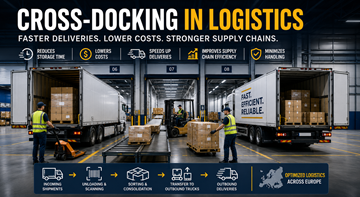
In this guide, we explain how cross-docking works, the different types of cross-docking operations, its advantages and challenges, and why cross-docking has become increasingly important in European logistics and distribution networks.
What Is Cross-Docking?
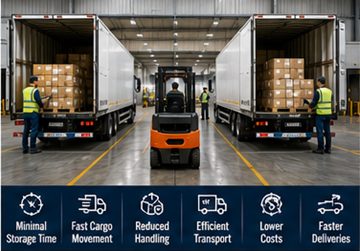
Cross-docking is a logistics process where products are unloaded from incoming trucks, sorted quickly, and transferred directly to outgoing transport vehicles without long-term warehouse storage.
The goal of cross-docking is to reduce storage time, accelerate deliveries, and improve transport efficiency across supply chains.
- Minimal warehouse storage
- Fast cargo movement
- Reduced handling time
- Efficient transport coordination
- Faster order fulfillment
- Lower warehousing costs
How Cross-Docking Works
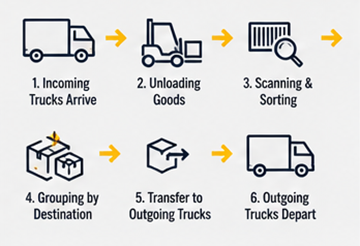
Cross-docking operations depend on fast coordination between warehouses, carriers, distribution systems, and transport schedules.
- Incoming trucks arrive at the logistics terminal
- Goods are unloaded from vehicles
- Products are scanned and sorted
- Shipments are grouped by destination
- Cargo is transferred to outgoing vehicles
- Outgoing trucks depart for delivery locations
In many cross-docking facilities, products remain inside the warehouse for only a few hours before continuing to their final destination.
Why Cross-Docking Is Important in Logistics
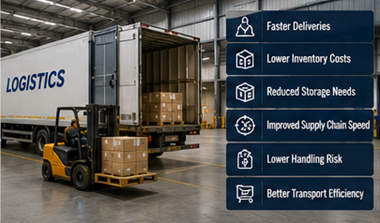
Cross-docking has become extremely important in modern logistics because businesses need faster deliveries, lower storage costs, and more efficient transport networks.
By reducing warehouse storage time, companies can move products through supply chains more quickly and reduce operational expenses.
- Faster deliveries
- Lower inventory costs
- Reduced warehouse space usage
- Improved supply chain speed
- Lower product handling risk
- Better transport efficiency
Types of Cross-Docking
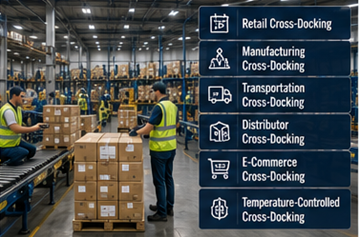
There are several types of cross-docking systems depending on the products, industries, and transport operations involved.
- Retail cross-docking for supermarkets and retail chains
- Manufacturing cross-docking for production materials
- Transportation cross-docking for shipment consolidation
- Distributor cross-docking for mixed product shipments
- E-commerce cross-docking for online order distribution
- Temperature-controlled cross-docking for food and pharmaceuticals
Each cross-docking model is designed to improve logistics speed and reduce unnecessary warehouse storage.
Cross-Docking Terminals and Warehouse Layout
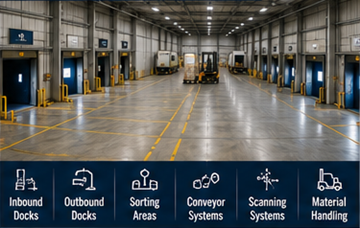
Cross-docking facilities are designed differently from traditional warehouses because they focus on rapid cargo movement instead of long-term storage.
Most cross-docking terminals include multiple loading docks, sorting zones, conveyor systems, and transport staging areas.
- Inbound loading docks
- Outbound loading docks
- Sorting areas
- Barcode scanning systems
- Conveyor equipment
- Forklifts and pallet handling systems
Cross-Docking in European Transport Networks
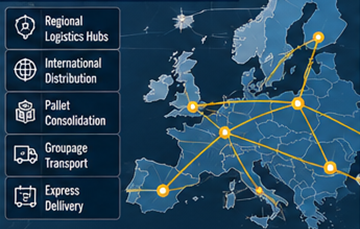
European logistics companies use cross-docking extensively because goods frequently move between countries, regional distribution hubs, and transport terminals.
Cross-docking helps reduce delivery times for international transport and supports efficient groupage and pallet distribution operations.
- Regional logistics hubs
- International freight distribution
- Pallet consolidation
- Groupage transport
- Express delivery operations
- Courier and parcel distribution
Technology Used in Cross-Docking Operations
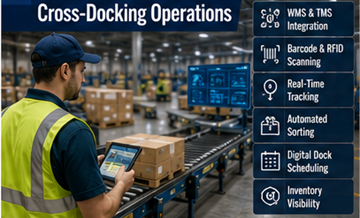
Modern cross-docking operations rely heavily on digital logistics technology and warehouse automation systems.
- Warehouse Management Systems (WMS)
- Barcode and RFID scanning
- Transport Management Systems (TMS)
- Real-time shipment tracking
- Automated sorting systems
- Digital dock scheduling
- Inventory visibility platforms
Technology allows logistics operators to coordinate inbound and outbound shipments more accurately and efficiently.
Benefits of Cross-Docking
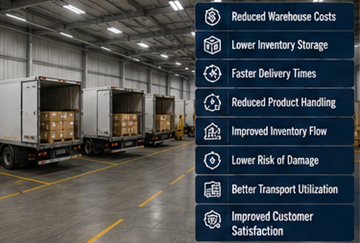
Cross-docking provides significant operational and financial advantages for logistics companies and supply chains.
- Reduced warehouse costs
- Lower inventory storage needs
- Faster delivery times
- Reduced product handling
- Improved inventory flow
- Lower risk of product damage
- Better transport utilization
- Improved customer satisfaction
Challenges of Cross-Docking
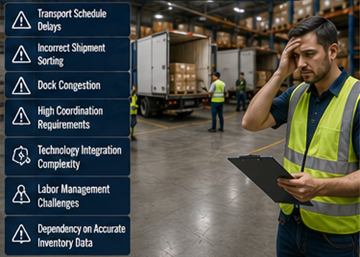
Although cross-docking improves efficiency, it also creates operational challenges that require careful planning and coordination.
- Transport schedule delays
- Incorrect shipment sorting
- Dock congestion
- High coordination requirements
- Technology integration complexity
- Labor management challenges
- Dependency on accurate inventory data
Successful cross-docking operations depend on real-time communication, accurate tracking systems, and strong transport coordination.
Cross-Docking vs Traditional Warehousing
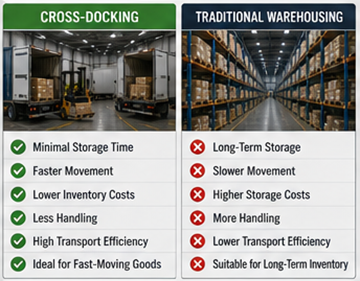
Traditional warehouses focus on long-term inventory storage, while cross-docking facilities prioritize rapid cargo movement and immediate shipment transfers.
- Traditional warehousing stores products for longer periods
- Cross-docking minimizes storage time
- Traditional warehouses require larger inventory space
- Cross-docking improves shipment speed
- Traditional storage increases inventory holding costs
- Cross-docking reduces warehouse handling operations
Future of Cross-Docking in Logistics
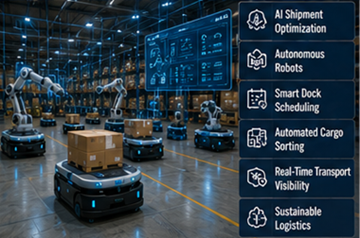
Cross-docking operations are evolving rapidly through automation, artificial intelligence, robotics, and smart logistics technologies.
Future cross-docking terminals are expected to become faster, more automated, and more connected to digital transport systems.
- AI shipment optimization
- Autonomous warehouse robots
- Smart dock scheduling
- Automated cargo sorting
- Real-time transport visibility
- Sustainable logistics operations
Conclusion
Cross-docking is one of the most efficient logistics strategies for reducing warehouse storage time, accelerating deliveries, and improving supply chain efficiency.
As European logistics networks continue to grow, cross-docking will remain a key solution for fast-moving transport, distribution, e-commerce, and international freight operations.
FAQ
What is cross-docking in logistics?
Cross-docking is a logistics process where products are transferred directly from incoming trucks to outgoing delivery vehicles with minimal storage time.
What are the main benefits of cross-docking?
Cross-docking reduces warehouse costs, improves delivery speed, lowers inventory storage needs, and increases transport efficiency.
Which industries use cross-docking?
Cross-docking is commonly used in retail, e-commerce, food distribution, manufacturing, courier services, and pallet logistics.
What technology is used in cross-docking operations?
Cross-docking operations use Warehouse Management Systems, barcode scanners, RFID systems, shipment tracking software, and automated sorting technologies.
What is the difference between cross-docking and warehousing?
Traditional warehousing focuses on storing inventory, while cross-docking minimizes storage time and prioritizes rapid cargo transfer between vehicles.
Why is cross-docking important in European logistics?
Cross-docking helps European logistics companies improve international freight distribution, reduce delays, and support fast regional transport operations.
eXus Dev